
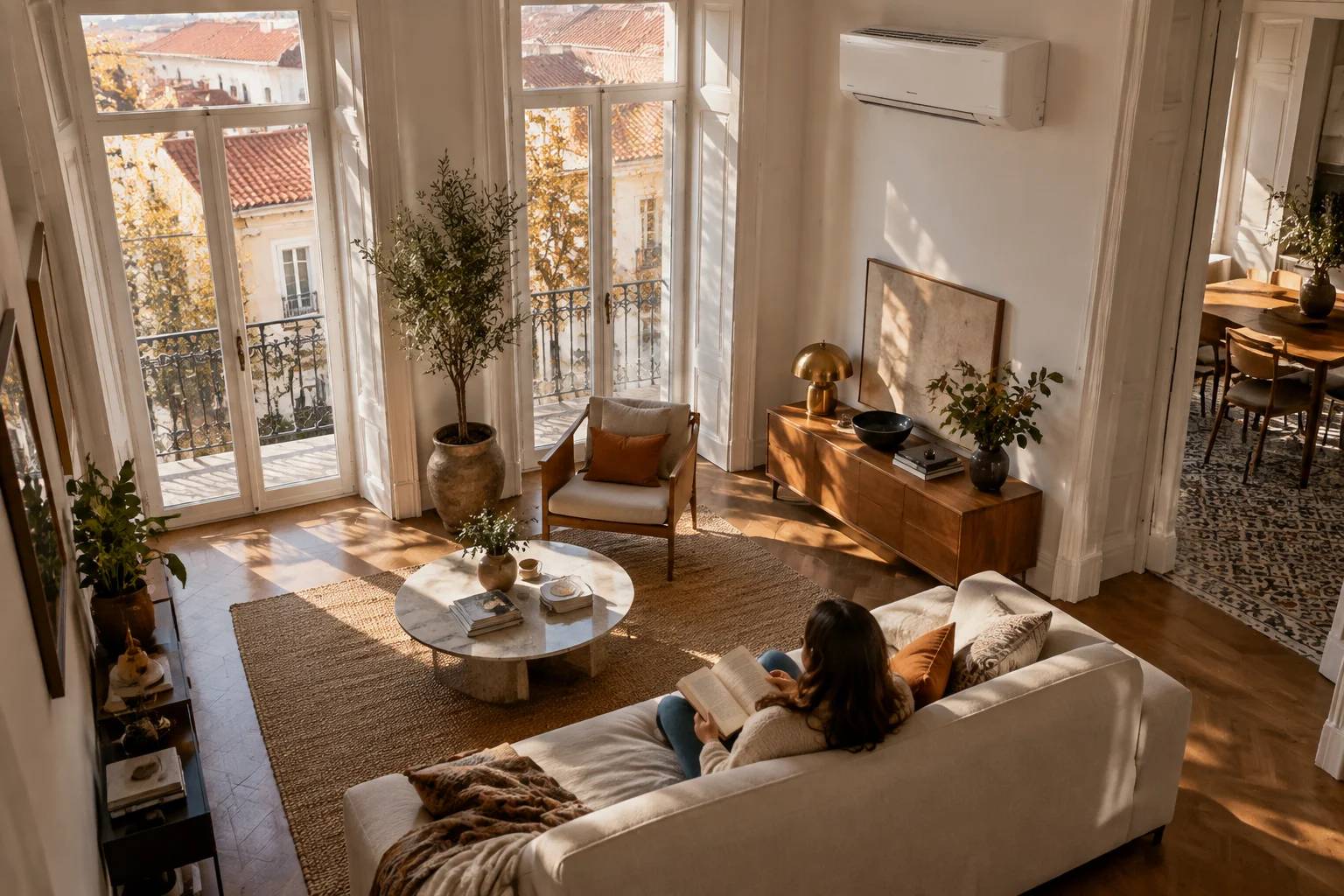
Air conditioning at home used to be for villas in Spain, not a semi in Surrey. Things have changed. We see more people lying awake, sweating through muggy nights, starting to wonder if now’s the time. Sometimes it is. Other nights, you might get just as much relief from a blackout blind and a decent fan.
Try the cheap fixes first
Before you buy anything, stop the heat getting in. External shading, reflective blinds and closing curtains on sunny windows during the day make a real difference. So does opening windows on opposite sides of the house in the cool of the evening.
If a room still bakes after all that, it's usually because it faces the sun, sits under the roof, or has lots of glass. Those are the rooms where air conditioning earns its keep.
Air conditioning at home: split systems, portables and the rest
Split systems do most of the work in British homes. You spot them high up on walls in flats and hotels, quiet boxes indoors, linked by a couple of pipes to something humming away outside on the wall or by the bins. The inside unit keeps things cool and out of the sun, while the outdoor bit handles the racket and the hot air. Reliable, tidy, and when the weather turns, most can flick straight over to heating. The technical name’s air-to-air heat pump, but everyone just calls it air con.
Portable air conditioners are the ones you lug from room to room, trailing a hose out the nearest window. You won’t need a tradesperson or planning consent, and the price rarely stings. They’re noisy though, and struggle to keep more than a single area cool. Fine for a few sweltering nights, but if the heat drags on you’ll soon feel the shortcomings.
Ducted air con turns up in larger places or where everything’s being gutted. The main kit hides in the loft or above the ceiling, sending cool air through ducts to vents dotted around the house. Once it’s in, you get a clean finish. But you’ll need plenty of space and patience. More building mess, more dust, more waiting about. We wouldn’t call it a quick job.
Sizing and placement
Get the size wrong and you’ll notice straight away. Too much power and the room goes chilly in no time, then the unit cuts out, leaving the air damp and strange. Too little and it’ll slog on, never quite getting there, wearing itself out. Don’t just count floor space. The installer should measure up properly, look at which way your windows face, think about the room’s shape, what’s in the walls and up in the loft. Let them do the maths. Guessing never ends well.
Pipes and drains are easy to overlook. But the whole thing depends on them. You’ll need copper pipe running from the indoor unit to the outside, often through tight corners or stubborn brickwork. Then there’s the water. Every time it cools, the system pulls moisture from the air, and if it can’t drain away, you’ll end up with puddles under the unit or streaks down the wall. The best jobs tuck the pipework out of sight and keep the water where it should be. Nobody wants ugly trunking snaking round the skirting, or a constant drip by the back door.
Placement matters. Indoors, don’t let the cold air blast straight onto your bed or sofa, or you’ll wake up frozen. Outside, the unit needs a bit of space and a proper fixing, not jammed under your neighbour’s window. We often see split units shoehorned into narrow alleys, all buzzing away. The people next door rarely see the funny side.
If you’re already opening up ceilings or chasing cables, get the air conditioning pipes in now, even if you’re not fitting the units yet. Much neater inside the wall than boxed in later.
Cooling should feel like a cool evening, not a blast from a fridge.
Running costs and noise
Split systems have come a long way. Left running gently, they're usually far thriftier than you’d think, especially if you don’t keep turning them off and on. What you’ll pay depends on how grafted the unit is, your electricity tariff and whether the room keeps the heat out, thick curtains and good insulation make a difference. Always pin installers down on energy ratings, and compare one model to another on like-for-like figures.
Don’t go overboard with the settings. Drop the temperature just enough to take the edge off, a few degrees below outside is all you need. Pushing for polar is bad for your bill, and you’ll feel it when you walk out. Most find a gentle, steady cool is the sweet spot.
Indoor units hardly make a sound on low. Still, check the decibel figures for both the inside and outside bits, and try to hear the real thing before you choose. No one wants a hum that keeps you up at night.
Looking after it
- Clean the indoor filters every few weeks in summer.
- Keep the outdoor unit clear of leaves and plants.
- Book a service every year or two to check gas levels and drainage.
- Run it on heat in spring and autumn; it's often cheaper than you'd think.
A neglected unit loses efficiency quietly, and dirty filters don't do much for the air you breathe either.
Ventilation alongside cooling
If your place is well sealed, a heat recovery ventilation system is worth a look. It pulls in fresh air and holds onto most of the heat or cool, so you don't lose what you've paid for. Doesn't do the job of air conditioning once things really heat up, but you'll notice a fresher feel round the house the rest of the year.
Questions to ask an installer
- How did you decide on the right size for each room?
- Where exactly will the indoor unit go, and how will the pipes run outside?
- Are you qualified to handle refrigerant gases yourself?
- How much noise do both the indoor and outdoor parts actually make, and what’s their real efficiency?
- What does the warranty cover, and what do I need to do to keep it valid?
We like someone who comes out, takes proper measurements and actually looks at each room, the way the heat sits, where the sun hits, the lot. If they just ask for the square footage over the phone, we’d look elsewhere. That’s not how you get work that lasts.
Our view
Sort out shade and get the windows open first. If that doesn’t cut it and a room’s still stifling, a properly installed split system is what actually works, and it’ll keep you warm in winter too. We’d start with the hottest room, then see what’s left.
