
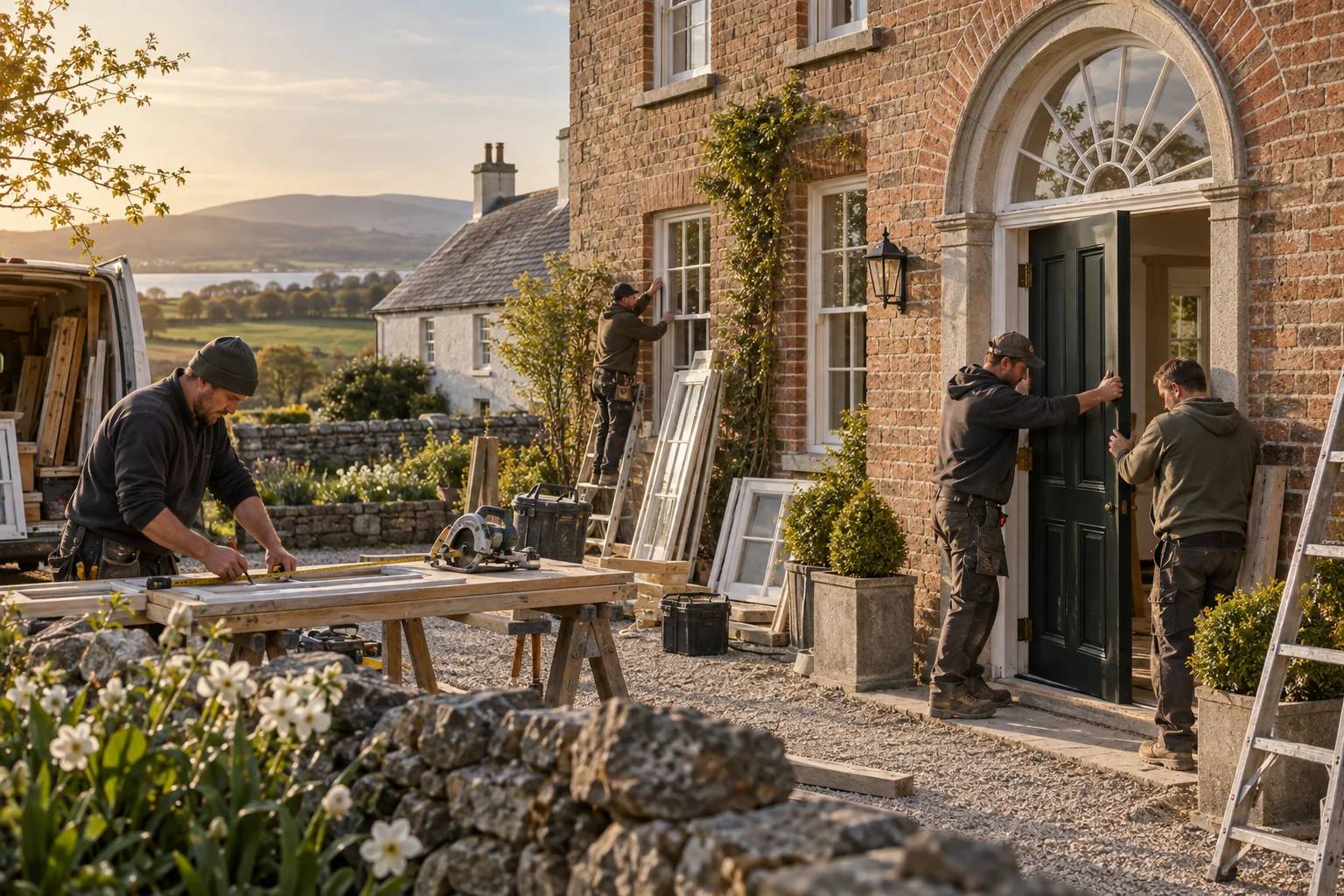

Choosing a new front door isn’t just about picking something that looks good. Your door is the first line of defence against intruders, the barrier against draughts, and the first thing visitors see. You want it to suit your home, keep you warm, and make sure your house is as secure as it should be.
In this guide, we’ll break down how to get the balance right. We’ll cover security features, materials like composite and timber, insulation, style choices, fitting, and the upkeep you'll need to plan for. By the end, you’ll know what matters and what you can ignore.
Choosing a new front door: start with security
Look at the lock first. Most people barely register it in the showroom, but that's what keeps your house yours. Go for a decent multi-point lock and make sure the cylinder's actually rated for security, not just shiny packaging. You sometimes see doors that feel like vaults, but a cheap cylinder means anyone determined will be inside in minutes.
But the lock's only part of it. Frames and hinges matter just as much. A heavy door's pointless if the frame isn't fixed into the brick, or if the hinges are flimsy. Proper fitters screw the frame straight into the brickwork, not plaster or old filler, no matter what you’re replacing.
Glass panels let in light, but put them too near the lock and you may as well leave the key out. Burglars spot weak points fast. Laminated or toughened glass helps, and a lock you can’t flick from the inside with a hand through a broken pane is even better.
Composite, timber, aluminium or uPVC
Pick the wrong material for your front door and you'll know about it soon enough. A door that's warped, draughty or looks out of place stands out for all the wrong reasons. We see plenty of softwood left with flaking paint or bare patches, leave it too long and it starts to swell or rot. At that point, you're looking at repairs, or more likely, a whole new door.
Composite doors cover a lot of ground. Rain, sun, the odd kick, none of it fazes them, and most people won't spot they're not timber. A quick wipe keeps them tidy. Aluminium's another step up: lean frames, sharp looks, feels solid as anything. But it rarely comes cheap. Then there's uPVC, hard to beat for price, does the job, though it's got that plasticky look and the whites can start to go off-colour after a few years facing south.
Ask about the guts of the door, not just the finish. What’s the core made of? How thick is the slab? You'll get more from seeing a whole door in a showroom than a little offcut. Open and shut it. The feel matters, a hollow uPVC door is light and a bit tinny, nothing like the weight of decent composite or proper timber. Heavier doors tend to be warmer and harder to force.
Got a Victorian terrace and want the old look without the hassle? Go for a composite with a timber-style grain. You keep the period style, but it shrugs off rain and doesn't need much more than a clean. Yes, you’ll pay more than for a plain uPVC, but think what you’ll save on sanding, paint and call-outs over the years. In the end, it’s your budget, your taste and how much bother you want after the fitters leave.
Keeping the heat in
If your front door lets out heat, you’ll pay for it every winter. A poorly insulated door can push up your heating bills by letting warm air escape and cold air creep in. Over time, that can add hundreds of pounds to your energy costs. The right choice is one with a well-insulated core, tight weather seals and a threshold that closes any gap at the bottom. If you want glass panels, ask for double or triple glazing, these keep in far more warmth than single panes.
Letterplates are a classic weak spot. If you don’t specify a draft-proofed letterplate, with an internal flap and brush seal, you’ll feel the chill and risk higher bills. Some fitters will offer a cage or secure box behind the slot, which also stops anyone reaching in for your keys. Ask any door company how they tackle draughts at the hinges, threshold and letterplate.
Sometimes the problem isn’t the door, but the fit. Even a top-quality door will leak heat if it’s fitted badly. Before you spend, check if your current door needs adjusting or re-sealing. For example, if you notice a draught at the bottom, a new threshold seal (£10–£30) could save you from replacing the whole door.
Style that suits the house
A front door should suit the house, not just the owner. From the street, it's the first thing anyone sees. If it looks out of place, it grates. Victorian terraces need proper panelled timber, nothing else feels right. A modern new-build can handle something bold, but try that on a weathered cottage and it just looks wrong. The wrong door can drag a place down, even hit the value. Swapping it later, after you've realised it sticks out, costs more than getting it right from the start.
Colour does more than most expect. The right shade can lift plain brick or tie in tired render, but pick one that clashes with the windows and you'll regret it every time you come home. Deep blue suits a red-brick terrace, gives it some weight. A loud yellow on a Georgian semi? Never works. Always ask for a visual mock-up or a proper sample board. It's not the place to wing it.
Hardware matters. Knockers, letterplates, handles, all want the same finish. Brass looks right on period houses. Chrome or matt black for something modern, or black iron for a bit of rustic. Miss out a draught flap on the letterplate and you'll feel it every time the wind picks up in the hall.
For listed buildings or in conservation areas, check with the council before you order a thing. Change the door without their say-so and you risk a fine, plus the extra cost of putting it all back.
Take a 1930s semi. Sage green composite, chrome hardware, suits the age, lifts the whole frontage. Go for a flat white uPVC with gold fittings and it sticks out for all the wrong reasons. Sometimes enough to put buyers off entirely.
What a good fitter does
A good fitter starts by measuring your doorway accurately, not just using standard brochure sizes. This matters because even a few millimetres out can lead to draughts, leaks or a door that sticks. If the opening is mismeasured, you might end up buying a door that doesn’t fit, which means extra costs for adjustments or, in the worst case, a new door entirely.
Removing the old door and frame is a job for someone careful. If they damage the brickwork or plaster, you’ll face extra repair bills and delays. When fitting the new frame, a skilled installer will pack and seal it properly, both inside and out. This stops cold air, water and noise getting in. They’ll also check that the door sits square in the frame, adjusting the hinges so your locks line up and work smoothly. A poorly hung door can mean security problems and a lifetime of slamming and rattling.
Before you choose a company, ask how they measure up, what protection they use for your home, and if they guarantee neat work. For example, a reputable fitter will use dust sheets and leave the entrance tidy. If your new door needs to be registered (for example, with FENSA for uPVC installations), they’ll handle the paperwork and give you the right guarantee.
- Measures the opening properly, not from the brochure sizes.
- Removes the old door and frame without wrecking the brickwork.
- Fixes, packs and seals the new frame, inside and out.
- Adjusts the door so the locks engage smoothly without slamming.
- Registers the installation where required and hands over the guarantee.
Let’s say your old timber door is draughty and sticks. A good fitter checks the brick opening, removes the old frame with care, fits your new composite door so it sits plumb, and seals it all round. The end result: a door that closes softly, locks securely and keeps the weather out, saving you hassle and money over time.
Garage doors and side doors
Easy to get fixated on the front door, but there’s no shortage of other ways in. The back gate, the old side door that rattles in the wind, that battered garage door with a latch from the last century. These are the soft spots. You can spend on a solid front door, but if you leave a flimsy timber side door with a tired lock, you’ve left your guard down. We see it time and again: burglars hardly ever try their luck on the obvious bit. They look for the slack corner. It’s nearly always the side door with a lock that wouldn’t trouble a toddler.
Pick the wrong door for the garage or side and it’ll cost you. If someone gets in through a hollow core or a cheap lock, you could find your insurance doesn’t want to know. Most policies don’t pay out if the door or lock falls short of their standard. You’ll have to sort out repairs from your own pocket, and your premiums are likely to go up next year. We’d always go for a solid core, proper modern locks, and the same sort of strength you’d expect for the front. Why do half a job?
Ask whoever’s fitting the doors if they can match the security on every way in. Anti-snap cylinders, real multi-point locking, not just a bolt and a bit of hope. Weatherproofing’s just as important, especially on a side door left to face the worst of it.
Say you’re choosing a composite front door with a decent multi-point lock. The composite side door that goes with it is usually cheaper, and if you’re having them fitted together, there’s scope to push for a better price at the same time. That’s the sort of detail that keeps the whole place secure. And cuts down on faff later.
Living with it: care and adjustment
Living with your new front door means keeping a close eye on how it performs over time. If a door sticks or the lock becomes stiff, it can be more than an annoyance, forcing a swollen timber door can damage the frame or lock, which can cost far more to fix than a simple adjustment. A poorly fitted or maintained door may also let in draughts or even compromise your home’s security. That’s why it matters to check early and often, especially in the first months.
Before you hire anyone, ask the firm how long their aftercare covers tweaks and what’s excluded. Get it in writing. Some only offer a few weeks, while others will come back for a full season. A good contract means you’re not stuck paying for callouts if the door drops or swells. If you skip this step, you could face bills for a locksmith or carpenter, which are never cheap.
For example, if your new composite door starts to catch at the bottom in its first winter, a good fitter should return to adjust the hinges at no extra charge. If you didn’t agree on aftercare, you’d be looking at a separate callout fee, sometimes upwards of £60, plus labour. Sorting this at the start gives peace of mind and avoids unwanted surprises.
Our view
Start with the lock. We always do. That’s what stands between you and anyone who shouldn’t be coming in. Don’t settle for anything without the British Standard kite mark. Cheap locks? Not worth the trouble. Sooner or later, they let you down or worse, let someone in. Door material matters too, timber, composite, aluminium, uPVC, all have their ways. Some ask for more looking after.
Some shrug off rain and frost better. Go for a bargain-bin door and you’ll see the usual: draughts, swollen wood, frames that twist, bigger bills, sometimes even a crowbar through the panel. It’s not just about a few quid saved. And a new door never ends up as cheap as you thought by the time it’s in and working.
But even a good door’s wasted if the fitting’s shoddy. Who fits it counts as much as what you pick. A proper installer checks the frame’s plumb, lines up the hinges, seals everything tight. You want a door that swings shut, locks first go, doesn’t scrape or rattle when the wind’s up. Rushed fitting shows up fast, gaps, leaks, or a door that won’t close unless you throw your shoulder at it. Ask who’s actually doing the work, if they stand by it, how long they’ll be on site. We wouldn’t let in a team we didn’t know.
Pick a solid composite, a decent lock, and someone you’d trust with your own keys to fit it. It’ll cost more than a flimsy uPVC job from the sheds, but you’ll notice, less draught, less racket from outside, just a door that does what it should. No need to make a show of it. The right front door gets on with the job, keeps you warm, stays put and doesn’t get talked about. That’s the one we’d choose.


