
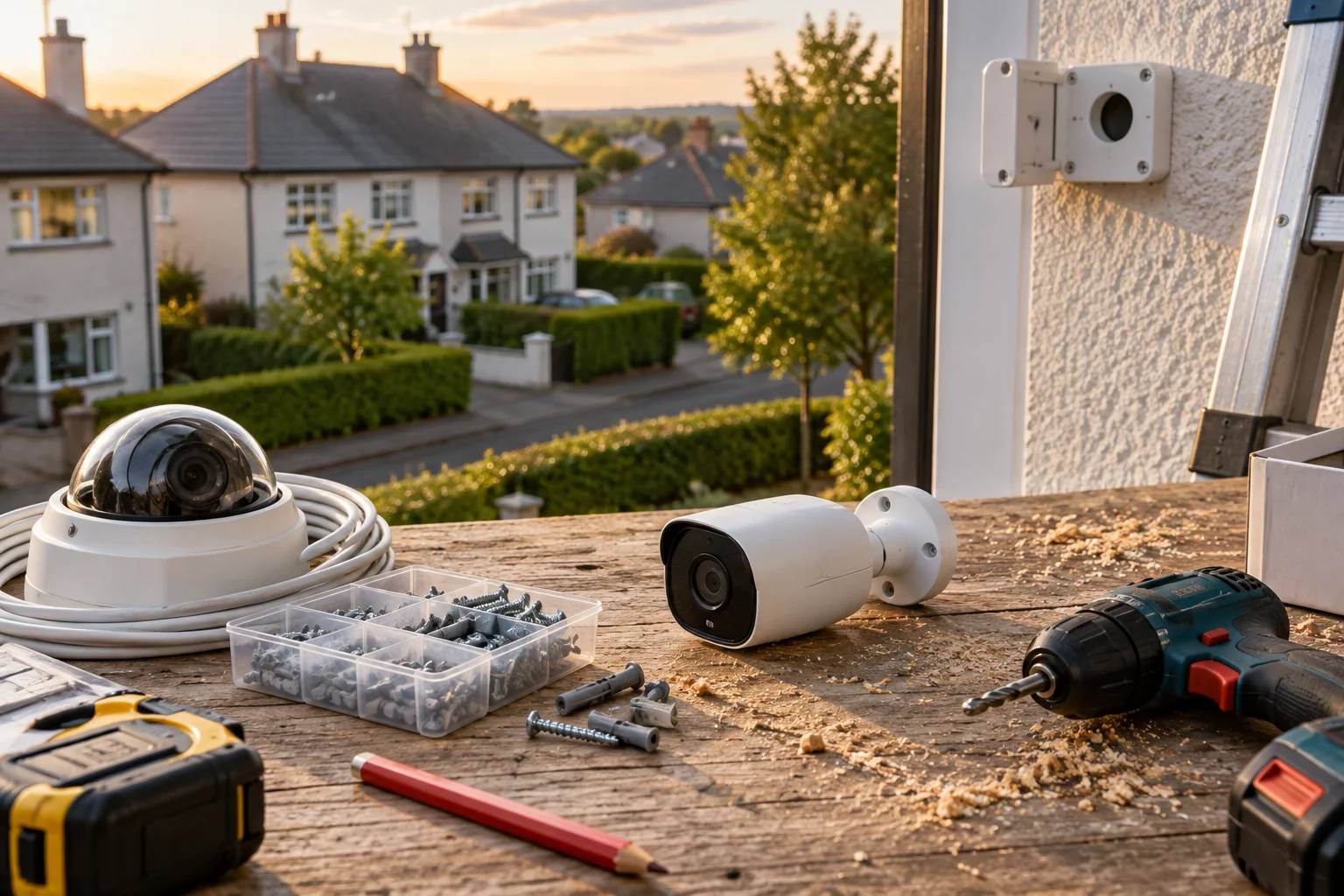
Security gadgets are everywhere, and it is tempting to start with a camera. We would start with the front door. A home security system works in layers, and the first layer is the one most often overlooked.
Start with doors, windows and locks
Most break-ins start at the door or through a window. It's usually a loose frame, a rubbish old latch, or someone’s left a window cracked open. Put proper locks on every outside door. Any window you could reach from the ground or a flat roof, fit a lock there too. Press on the frames, if they flex or wobble, they want fixing. If you’re not sure, get a locksmith in. We always ask them to check every lock’s up to scratch. A lot of old ones aren’t.
Don’t just focus on your main doors. Sheds, garages and side gates are some of the easiest ways for someone to get into your property. If your shed’s unlocked, you might as well hand over your tools—exactly what they’ll use to break in. Side gates are often out of sight and barely secured. Most can be opened in seconds with a lift of the latch. Add a bolt or a padlock. Make it awkward for them.
Small habits matter. Lock up, even if you’re only in the back room. Never leave keys in the door or anywhere near the letterbox. Keep a torch by the bed. Path lights help, burglars hate feeling watched.
Alarms: what they do, and which kind
A good alarm, visible from the street and actually working, puts off a lot of would-be intruders. It should wake you, your neighbours and anyone else within earshot if someone tries their luck. Wired alarms rarely go wrong. Wireless kits are quick to put in and you can add bits easily. Both do the job if they're fitted properly.
Where you put the sensors matters just as much as which system you pick. Make sure they cover the paths someone would actually take through the house, not just the front door. The keypad should go somewhere you can get to in a hurry, but where no one can peek at you typing the code.
- Bells-only alarms make plenty of noise, but don't contact anyone.
- Self-monitored alarms tell your phone, so you need to decide what to do.
- Monitored alarms send an alert to a response centre, but you pay a subscription.
We'd think about how much time you spend away, how quickly you could get back, and if your insurer asks for anything specific.
Cameras that help, not just record
Cameras are meant to put people off, and back you up if something does happen. That only works if you put them in the right spots. Aim them at the front and back doors, catch anyone near the driveway or side gate. Not too high, or you'll just get the tops of heads. You want a clear shot of faces, especially at night. Good night vision and straightforward recording matter more than squeezing out every pixel.
A video doorbell’s often the handiest of the lot. It catches everyone who comes to the door, and you can answer it from your phone, wherever you are.
Think about what happens to the footage. Cloud storage means recordings are safe even if someone nicks the camera, but you’ll pay a monthly fee. Keep it local and there’s no charge, but if the kit goes missing, so do your files. Some systems offer both, which covers most bases.
The best camera is the one that sees a face, not a hood.
Smart locks and connected homes
Smart locks let you open the door with your phone, give temporary codes to cleaners or trades and see who came and went. They are convenient, but security still depends on the lock itself. Choose one that meets a recognised standard and has a reliable backup if the battery or connection fails.
Before choosing, check the lock fits your door and whether it replaces the whole lock or just the inside part. Some smart locks keep your existing key working, which is reassuring if you are trying one for the first time.
Connecting locks, alarms, cameras and lighting into one system is useful when it is simple to run. A strong home network and good passwords keep the whole system safe.
Choosing a home security system installer
- Will you survey the house and explain the risks you see?
- Is the alarm installed to a recognised standard, with a certificate?
- Where will each camera go, and what will it see?
- How are recordings stored, and who can access them?
- What does servicing cost, and what happens if something fails?
Everyday habits that keep it working
Even the best system only works if it is used. Set the alarm every time you go out, and at night if your system has a part-set mode for the downstairs. Make sure everyone in the house knows how to set and unset it.
Keep the system healthy. Replace batteries in sensors and smart locks when the app warns you, update camera software and change default passwords on anything connected to the internet. A yearly service on a professional alarm keeps it reliable.
Tell your insurer about any alarm or locks you fit. Some policies require them, and some insurers offer better terms for homes that have them.
Our view
Build security in layers: strong doors, windows and locks first, then an alarm that suits your life, then cameras placed to see faces. Add smart features where they make life easier, not just because they exist. A good installer will start with a walk around the house, not a product brochure.
