
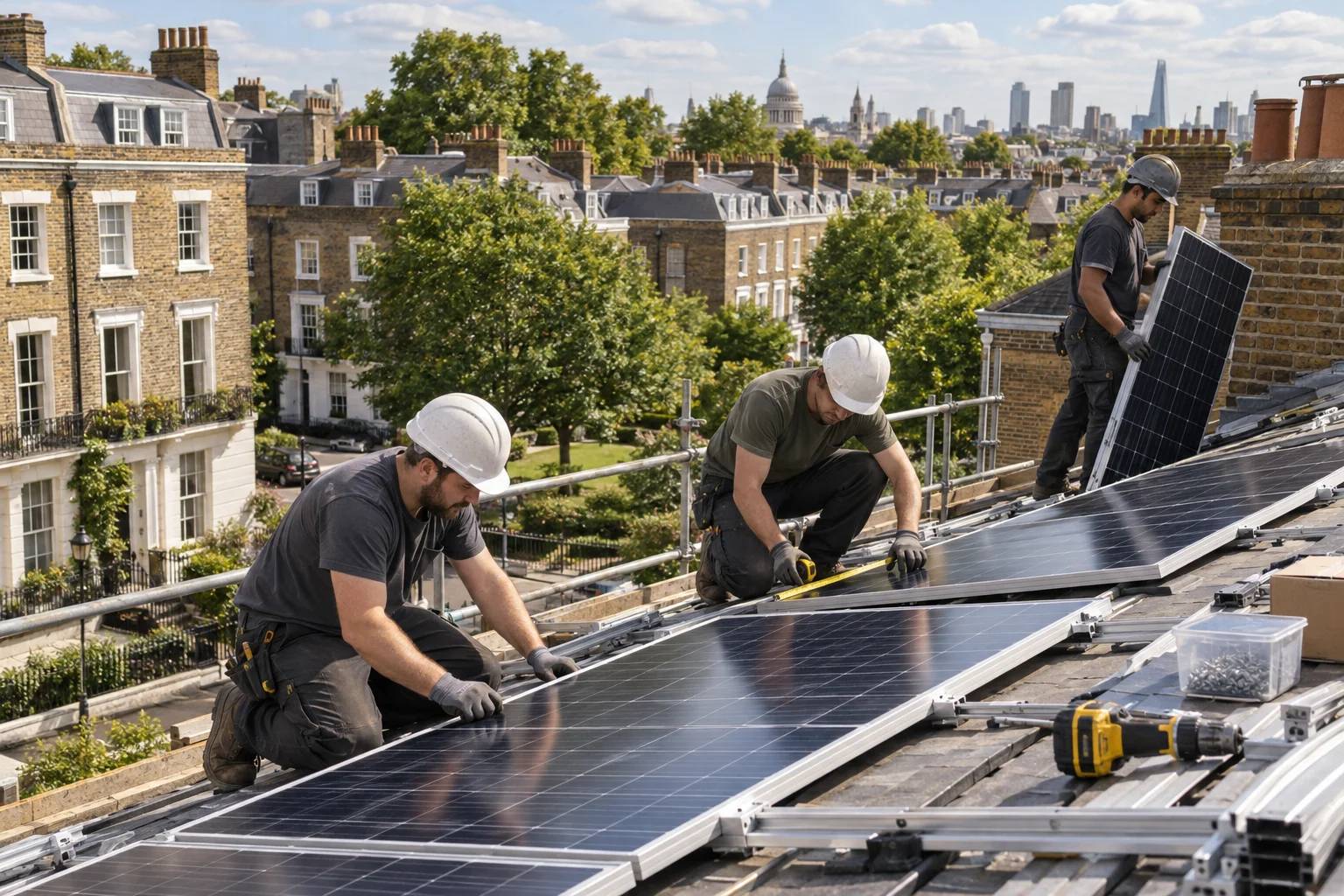
Solar panels and battery storage ought to work away in the background for years, quietly cutting your bills. That’s if you get the basics right. It’s easy to overdo it, or pick the wrong spot and end up with panels facing the wrong way. Or worse, let someone fit them who’s never done a proper job. The real work starts before anyone even gets the ladder out.
Start with the roof
Panels work best on a roof that faces south, but you’ll still get good results from east or west. You’ll see power come in earlier or later in the day, which can suit some households better. North-facing roofs? Not ideal. Shade is the thing that catches people out. One chimney, a neighbour’s tree, even a TV aerial can knock out more than just the panel it covers. If there’s shade, the way the system’s set up matters even more.
Check the roof before you do anything else. Panels aren’t coming down for at least twenty years, so put off any repairs and you’ll pay twice, once to have them up, again to take them down and refit. Loose ridge tiles, flaking felt, wonky gutters: sort them now, not later.
Size it to how you use electricity
A decent installer will want to see your electricity use over a full year, not just a quick look at a recent bill. That’s because you want panels that match the way you live, not just the biggest array you can fit. The goal’s to cover as much of your daytime use as possible, but without tipping into producing piles you can’t use or store.
You’ll find your usage history on your smart meter or in your energy supplier’s app. The half-hourly breakdown shows when you’re actually using power. That’s what tells you how many panels are sensible, and whether a battery would genuinely pull its weight.
Look a few years ahead, not only at today. An electric car, a heat pump, working from home, any of these can shift what ‘right-sized’ looks like.
Solar panels and battery storage: when a battery helps
Solar panels do the heavy lifting when the sun’s high—late morning to mid-afternoon. The snag is, that’s not usually when the house is at its busiest. The oven goes on, kettle boils, lights flick everywhere after five, once the place fills up again. That’s when a battery starts to make sense. It hangs onto what the panels make while you’re out, ready for when you need it. So if you’re often out during the day, or you chew through power after dark, you’ll feel the benefit. It stands out even more if your tariff cuts rates overnight and you want to top up the battery while you sleep.
If you’re at home through the day and use power as the panels feed it in, a battery won’t shift the numbers much. You can always add one later, as long as the installer has left the cabling sorted and a spot free in the airing cupboard or by the fuse box. We often see people start with panels, then put a battery in a year or two on if life changes.
The best solar setup fits your real habits, not just the biggest number someone flashes in a pitch.
Panels, inverters and the parts that fail first
Panels rarely put a foot wrong. Once they’re bolted to the roof, they just get on with it. Warranties stretch on for decades and, in practice, most panels behave themselves. It’s the inverter that usually causes trouble. That’s the metal box, often lurking by the consumer unit or tucked away in the loft or garage. Always ask exactly which brand you’re getting, how long the guarantee lasts, and what your installer will do if it lets go. Inverters need changing much more often than panels. By some distance.
Don’t ignore the monitoring. Nearly every system comes with an app now, so you can keep an eye on what your panels and battery are up to. Glance at it now and then. If generation drops on a bright afternoon, something’s up. Might be a tripped breaker or a loose cable. More often, it’s the inverter again.
Some roofs make life more difficult. Chimneys, vent pipes, awkward corners or next door’s fir tree can throw shade on odd panels. If that sounds like yours, have a look at optimisers or microinverters. You’d need one per panel. They don’t come cheap, so check if you’ll actually get the benefit before signing up for extras. No sense paying out for kit that won’t help.
Choosing an installer
- MCS certification, or you won’t get paid for what you export. Most grants and schemes need it too.
- A proper design, not just sales chat, you want to see how the panels fit on your roof, where shadows will fall and what output you can expect.
- Details in writing: make, model and warranty cover for every bit of kit, panels, inverter, battery.
- Ask how they deal with scaffolding, roof brackets and telling your network operator. Not all firms bother to mention the paperwork.
- Who picks up the phone if there’s a fault in year five? You’ll want a name, not just a call centre.
Exporting power and choosing a tariff
Once your panels are up and running and the battery’s topped out, any extra electricity you don’t use gets pushed back into the grid. Thanks to the Smart Export Guarantee, your supplier pays you for whatever you send out, but what you get depends on who you’re with. Some pay far better than others. Shop about, don’t jump at the first number they offer.
The tariff you’re on matters just as much as the export rate. Some suppliers do time-of-use deals, cheaper power late at night, pricier in the evening. That’s where a battery earns its keep. Charge up when it’s cheap, run the house off it when it’s not. A decent installer should talk you through this, not just the hardware.
Worth checking your tariff every year. Deals shift. What worked when you started can easily stop making sense.
Our view
If your roof’s sound, solar is hard to fault. Never let anyone fix panels up there until you’ve looked at the tiles and had a proper feel for the rafters. The battery pays off only if you’re using plenty after dark. As for picking an installer, go with someone you’d trust in your loft when you’re out. Chances are, you’ll be calling them again.
