
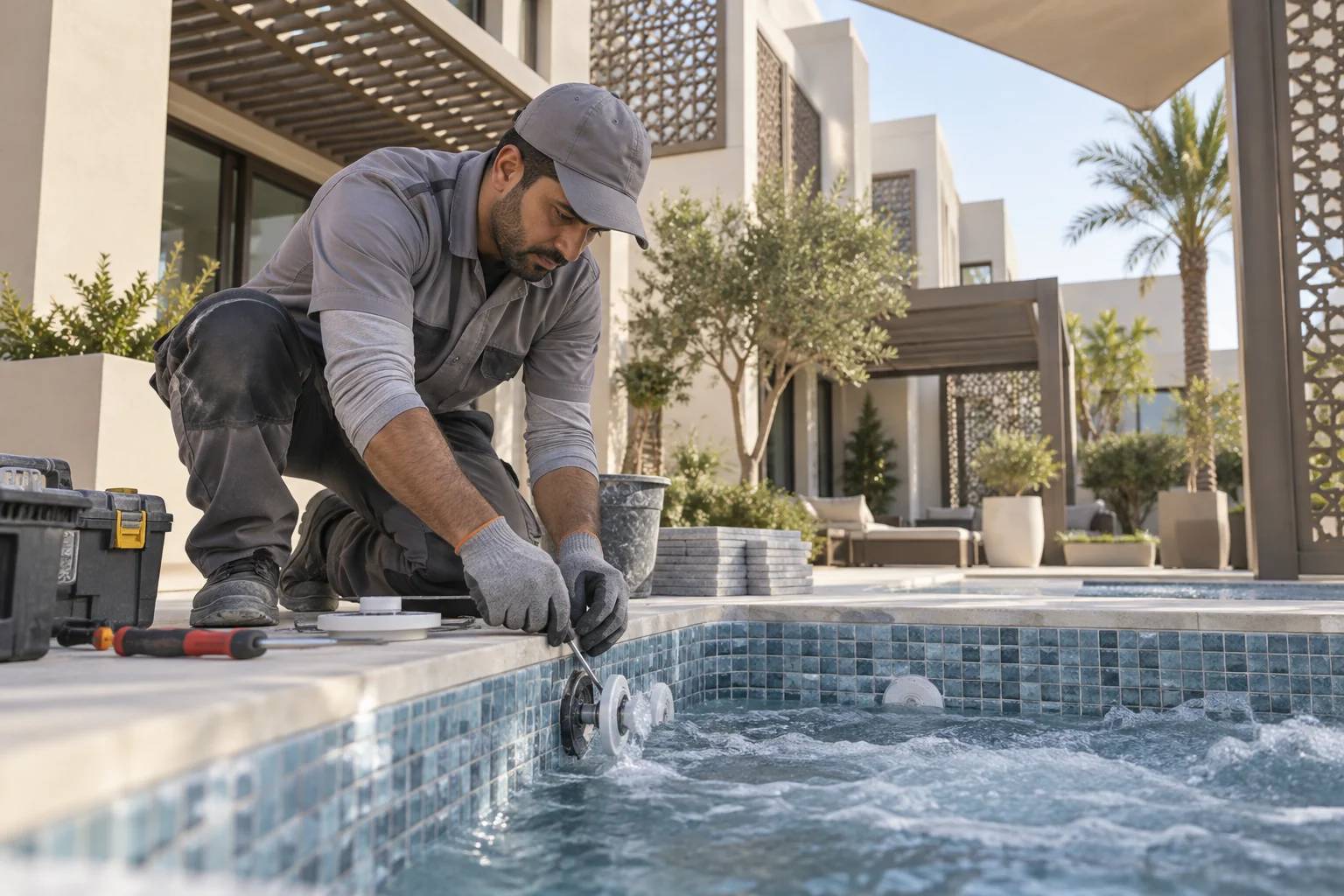

A pool’s meant to be the one spot in the garden where you can switch off. But it won’t stay that way on its own. Most swimming pool maintenance is about small, regular jobs, much quicker than sorting out a pool once it’s gone cloudy or green.
Keep the water moving
If you want clear water, you need to keep it moving. The pool pump does most of the work, shifting water through the filter and round again. That’s what gets rid of dirt. The sanitiser can only do its job when the water’s actually circulating. Run the pump long enough for a full turnover, every drop through the system, each day. Every pool’s different, so ask the installer or a pool engineer for the right timing.
Look at the direction of the return jets and the way water flows back in. If you angle them to push water round towards the skimmers, you’ll keep the surface moving and stop debris and algae building up in the corners. Jets pointed straight out tend to leave patches where nothing moves and dirt collects.
Deal with the filter. Clean or backwash it when the manufacturer says. If it gets clogged, the water clouds up fast, we see that all the time.
Open up the pump strainer basket and empty out anything that’s landed there. Leaves, grit, bits of garden, none of it does the pump any favours. It only takes a minute but it’s the job most people forget. A full basket means the pump’s straining and it won’t thank you for it.
Balance the water chemistry
Don’t just glance at the water and hope for the best. Test it, and do it often. If the sun’s been beating down or there’s just been a thunderstorm, check again. Same goes after a heavy swim session. You’re looking at three things: the sanitiser level, the pH, and the total alkalinity. Let the pH wander too far off centre and the chlorine can’t keep up. That’s when you start to get stinging eyes and scratchy skin.
Saltwater pools convert salt into chlorine, and plenty of people prefer the way they feel. But don’t be fooled into thinking they’re maintenance-free. You still need to keep on top of the water chemistry. The system won’t look after itself.
Storm last night? Pool full of bodies at the weekend? Or a run of hot weather? The balance can slip fast. Test again within 24 hours and put it right before it clouds up.
A weekly swimming pool maintenance routine
- Fish out leaves and anything else floating, and don’t forget to empty the skimmer baskets. They fill up fast.
- Give the walls and floor a good brush. If you let algae take hold, it’s a pain to shift.
- Hoover the floor, or check the robot hasn’t missed patches. They’re handy, but not magic.
- Dip your test strips. Adjust the chlorine or pH if they’re drifting.
- Glance at the water level, and check the pressure gauge on the filter. If the pump sounds odd, don’t ignore it.
Ten minutes, once a week, and the pool stays clear. Skip a couple and you’ll lose your weekend getting it back.
Covers, heating and the seasons
A pool cover does more than tick a box. Keeps leaves out, holds the warmth in after the sun's gone down, and slows the water drifting away when it's hot. If you heat the pool, you’ll feel it in the bills. They don’t jump so much. Automatic covers can make life easier. And if there are children about, they’re an extra barrier, nothing beats supervision, but every bit helps.
But covers need looking after. Leaves, twigs and rainwater pile up on top, so sweep them off when you see them. Storing the cover for a stretch? Let it dry through before rolling it away. Once a season, check over the straps, reels and fittings. Odd little fixes now mean you avoid bigger problems later.
When autumn turns up, start thinking about putting the pool to bed. Get the water right first, then drop the level if you have to. Double-check the pump and pipes, nothing worse than a split pipe after a cold snap. Fit the winter cover and leave it until spring.
Spring means waking everything up again. Take the cover off, net out anything that’s landed there, and fill up the water to the mark. Go over all the kit, pumps, filters, even the lights in the pool wall. Test and balance the water before anyone thinks about getting in. If the pool’s been shut a long while, we tend to bring in a professional. Avoids headaches.
When to call a professional
- Water's still green or cloudy, even though you've checked the chemicals and run the filter.
- You keep topping up the water but it drops again, and it's not just from hot weather.
- The pump sounds odd, the filter pressure's off or something keeps tripping.
- Tiles are starting to crack, the liner looks like it's giving up or the surface feels gritty.
- You'd rather have someone else handle the lot so you can just get in and swim.
Equipment that makes life easier
Robot cleaners have changed the game. They'll climb the walls, scrub the floor and get on quietly with the job. All you really need to do is empty them out now and then. Many will even run while you're out. They won't take over skimming or testing the water, but you'll spend a lot less time with a brush in hand.
Variable speed pumps are a big step up from the old single speed types. They can run slowly most of the day, so you use much less electricity. If your pump has been around for years, ask someone who knows pools if it's time to change it.
Automatic dosing and smart monitors will test and adjust the water for you. Still, it's best to back them up with a manual test now and then, just to check nothing's gone off. And you need someone who understands what those numbers mean. The rest is just kit.
Our view
Keep the water moving. Keep the chemistry right. Fish out whatever the garden throws in – leaves, grit, the lot. Little jobs done often head off bigger ones. Don’t ease up just because the sun’s gone in. And get a proper cover, not just a bit of plastic sheet. When something’s not right, get someone who’s seen it all. Leave a leak, and you’ll wish you hadn’t.


